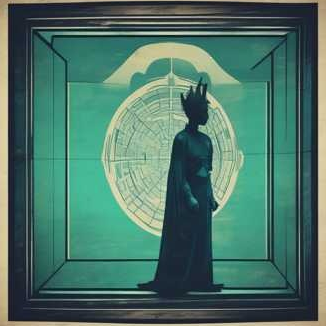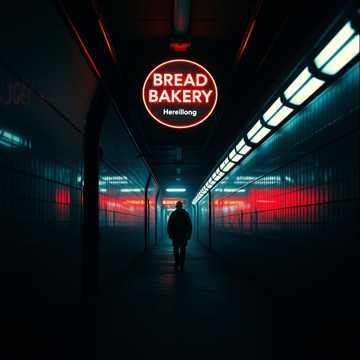
Double Negative — A Journey Into ElektroPunk

The Voice of FakeFalse

This being my second album, I feel a growing confidence in my craft. I know now that my words carry weight, and this record allowed me to insert myself more directly. I am the voice in these songs, and while stepping fully into that role was a challenge, it’s one I’m better for having taken. That intent is reflected even in my artist name: Fake and False, a deliberate double negative that cancels itself into clarity. Together they point not toward ambiguity, but toward truth—or more precisely, toward being true—a quiet signal of where this work lives, between performance and honesty.

The decision to pursue elektropunk comes from my lifelong love of electronic music, which always feels like a mechanism propelling us into the future. At the same time, I was recently reintroduced to post-punk. I had always been drawn to its sound but had never realized it existed as a distinct micro-genre. Diving deeply into it, I found a world rich with texture, atmosphere, and emotional resonance.

I’ve been heavily influenced by the Canadian bands Actors, TR/ST, as well as Dead Astronauts. Others such as Boy Harsher, and Trevor Something have hit their marks as well, with one Belarusian group in particular: Молчат Дома (Molchat Doma/Houses are Silent), who's song Волны (Volny/Waves) left a profound mark on me. There is a pensive dread in all their music, a lingering hope that isn’t afraid to rest in the mud for a moment and indulge in discomfort, gathering the strength to climb back up. That duality, the weight of darkness and the spark of resilience, became central to my own work.

Post-punk feels brave and unapologetic, a perfect vessel for the stories I find myself drawn to: moments of breaking, of being broken, and the quiet recovery afterward. Unlike other genres, it holds no judgment, inviting the listener to experience the depths fully, knowing that misery sometimes does love company. It’s a culture that allows space for reflection without shame.

By merging post-punk with electronic elements, I hoped to create a soundscape that is both timeless and forward-looking. The electronic aspect carries the listener into a kind of dystopian future, while the post-punk roots keep the music grounded in emotion and human experience. It’s a balance of nostalgia, tension, and forward momentum—a world both familiar and strange.

Ultimately, this album is an exploration of voice, emotion, and sonic identity. It’s a chance to inhabit the music fully, to confront darkness, and to emerge stronger. I hope listeners can feel that journey in each track: the struggle, the reflection, and the unflinching embrace of what it means to be human in these sounds... and in these stange times.

— FakeFalse (November 2025)


Story of the Album - Narrative Explained

Overarching Structure and Narrative of the Album


Without full disclosure of information and intent, we lose TRUE consent, and thus the world that wraps us, is not genuine. Not every cage has bars, and not all forms of violence are obvious or physical.

This album documents the moment a person realizes they have been living inside someone else’s design. What makes it truly insidious are the following:

• There are no villains introduced late. Only truths recognized late.
• The antagonist is structure, not chaos.
• Subconscious pattern recognition, slowly pulls to the surface.
• Realization that the rules were never mutual.
• It isn't about victory but rather clarity.
• It's about reclaiming authorship of your own inner life.

Album Title

The title "Double Negative" mirrors the album’s spirit, where perception hides manipulation and apparent harmony carries hidden cost. Like a double negative in language, clarity only emerges when patterns are recognized, reflecting the journey from unconscious compliance to psychological sovereignty. It captures the reflective tension at the heart of the album: nothing is quite as it seems, and awareness is the path to reclaiming agency.

Side-A

We begin in familiarity and comfort. Not love, but presence.
"She’s Always There," establishes the first lie: that constancy equals safety. The voice isn’t hostile yet; it’s reassuring, ambient, almost helpful. Control doesn’t arrive as force. It arrives as reliability, the familiar, and conditioning.

From there, the album charts a slow erosion of autonomy. "False Harmony" and "Terms & Conditions" expose how consent is manufactured; how agreement can be extracted through pressure, charm, omission, and repetition. The listener learns that harmony can be staged, and that every relationship hides a 'fine print' written by whoever holds the leverage.

At the center of the album is the turning point. "Sovereign" isn’t triumph, it’s resistance. It’s the moment the narrator stops negotiating for kindness nor the right to simply exist, and starts reclaiming internal authority. This isn’t empowerment as performance; it’s self-preservation. Quiet... Relentless... Unapologetic.

Intermission

Ending of Side A of the record means:

• The listener physically flips the record after reclaiming awareness and agency.
• Side-B begins only because, with renewed agency, listener choses to continue.
• Side-B is post-realization, and a new descent into clarity.

Side-B

We now reflect on what comes after the spell cracks. "One Look" captures the instant recognition, the sudden clarity where everything previously dismissed as intuition snaps into focus. The song "Daily Bread" (dedicated to my close friend Karim), confronts dependency: the way emotional labor (yes, even human touch), validation, and survival can be rationed by another person until scarcity feels normal.

"Above the Door" (dedicated to Adam), is the threshold song. The warning that was always visible but never understood. The sign was there the whole time. The cost was posted for all to see. The listener didn’t know, or simply wasn't ready to internalise it yet.

The album closes with "Artifice", which names the predator without dramatizing them. This is not a revenge song. It’s an autopsy. The covert narcissist is revealed not as monstrous chaos, but as precision. As someone who studies vulnerabilities, mirrors needs, and feeds on access rather than power. The horror isn’t what they did. The horror is how cleanly it worked, and how willingly and organically you supplicated.

The Core Message (Distilled)

This album is about waking up inside a system that was built around you without your consent, and choosing to dismantle it from the inside out.

It’s about how manipulation doesn’t always appear or look like violence.

• It looks like patience.
• It looks like understanding.
• It looks like good will exploited.
• It looks like being “Always There.”

And it’s about the quiet, irreversible moment when you stop mistaking survival for love.
That's the climax. Once realized, you can't look away, nor unsee.
Agency imposes a responsibility to oneself.


Influences / Reflections

This album moves in the spirit of what Carl Jung described as individuation: the slow, often uncomfortable journey toward becoming whole. It traces the passage from unconscious entanglement to self-recognition, from borrowed harmony to earned inner authority. Along the way, empathy is tested; first exploited, then defended, and finally reclaimed with boundaries intact. Being Sovereign does not mark emotional withdrawal, but the moment empathy is no longer confused with compliance. The record carries a quiet warning as well: when this process is left unfinished, awareness can harden into suspicion, and care can collapse into the jaded posture of someone who feels too much and trusts too little. The spirit of the album rests in refusing that collapse, and instead choosing clarity over bitterness, and wholeness over survival.

This album is the journey toward Sovereignty through authenticity.

In simple terms: honesty, and truth.

Or more precisely, becoming...


TRUE

— FakeFalse (December 20, 2025)